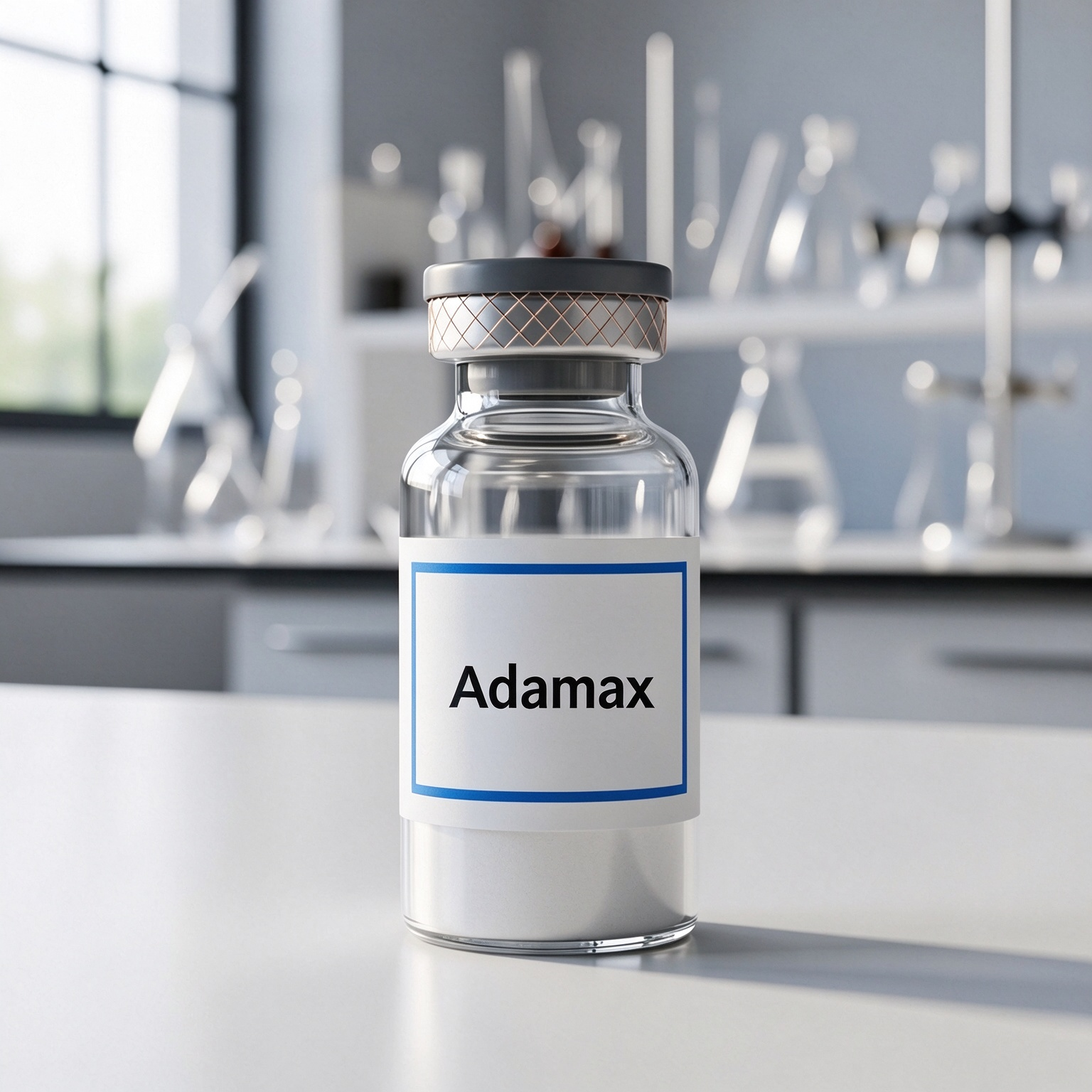
Adamax is a peptide consisting of 9 amino acids. Each kit contains 10 vials from one batch.
Interested in this product? Reach us via the contact details below.
Adamax is an investigational peptide derived by modifying the Semax molecule with an adamantane fragment — the same hydrocarbon cage structure found in the nootropic candidate P21. That modification meaningfully alters two properties: membrane permeability and resistance to proteolytic breakdown. Both translate, in preclinical studies, into longer duration of action and more consistent blood–brain barrier penetration. Scientific interest in Adamax centers on three parallel studies threads: (1) endurance and recovery under sustained physical load, (2) brain-derived neurotrophic factor (BDNF) expression in the hippocampus, and (3) sensitivity of the TrkB receptor — a key signaling hub for neuronal plasticity, memory consolidation, and mood regulation. These are the same pathways targeted by many classical nootropics, but Adamax’s adamantane stabilization allows it to be dosed less frequently while maintaining plasma and CNS concentrations.
Adamax shares Semax’s Pro-Gly-Pro backbone, a fragment derived from adrenocorticotropic hormone (ACTH) with no hormonal activity of its own. What it brings to the parent molecule is metabolic stability — where unmodified Semax is cleared quickly by peptidases, Adamax resists enzymatic degradation and produces a more sustained downstream signal. Three mechanisms have been described in studies publications:
Disclaimer:
All products on this site are for Research, Development use only. Products are Not for Human use of any kind. The statements made within this website have not been evaluated by the US Food and Drug Administration. The statements and the products of this company are not intended to diagnose, treat, cure or prevent any disease.